Invader
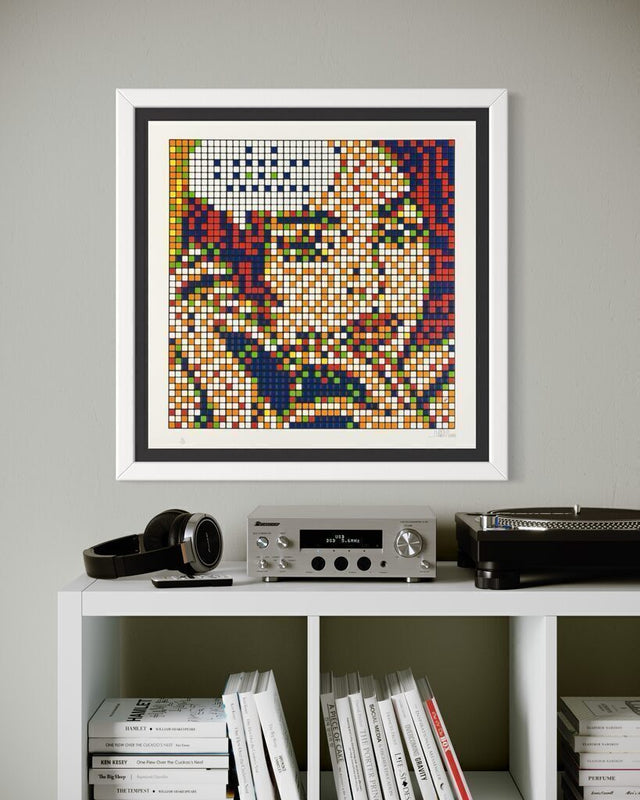
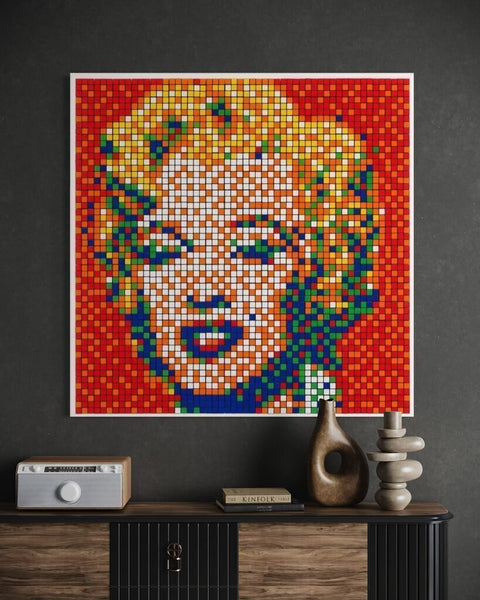
“Rubikcubism reduces the icons of mass image culture to a fixed six-colour, low-resolution grid — the resolution of the cube, not of the photograph.”
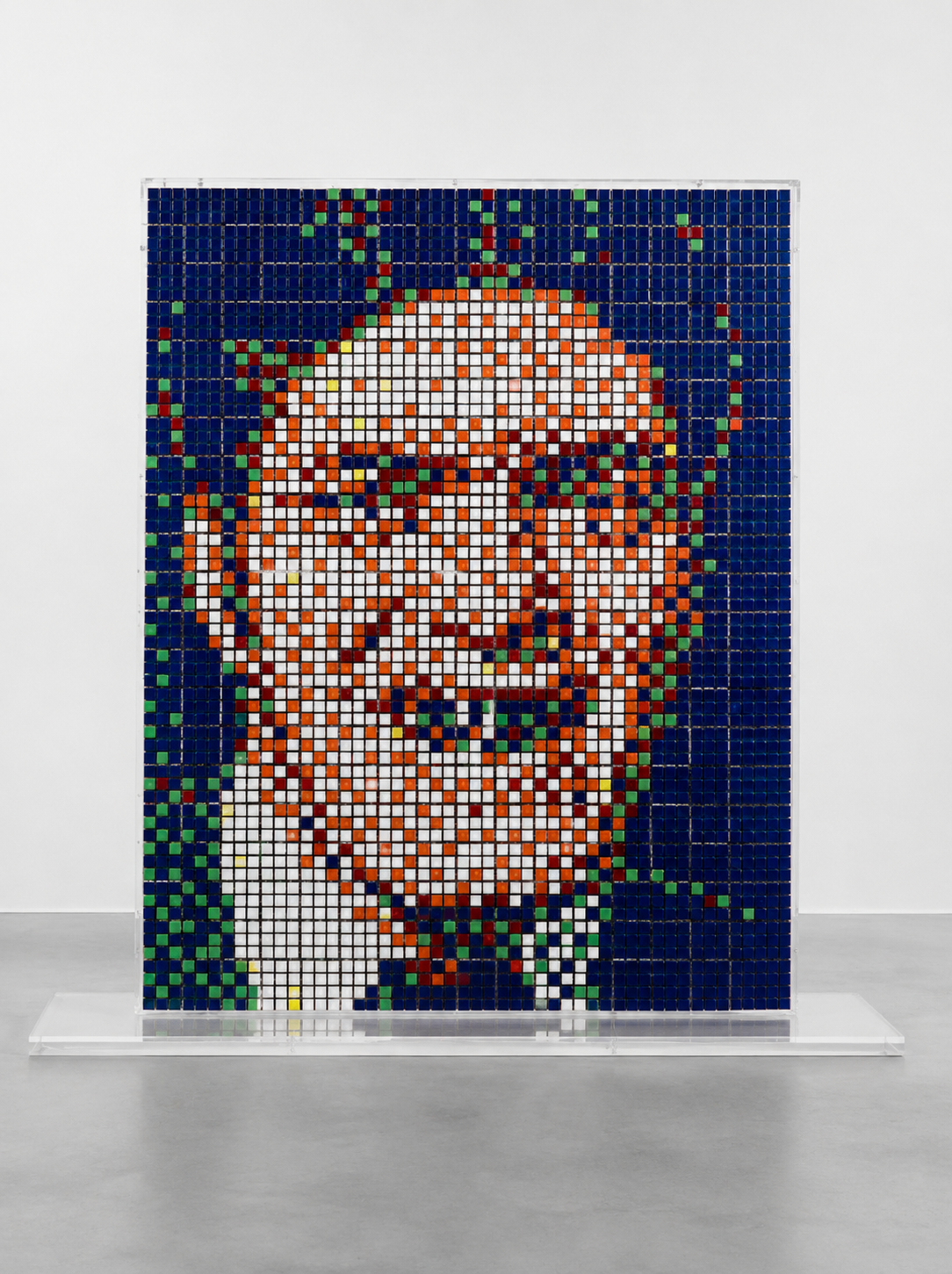
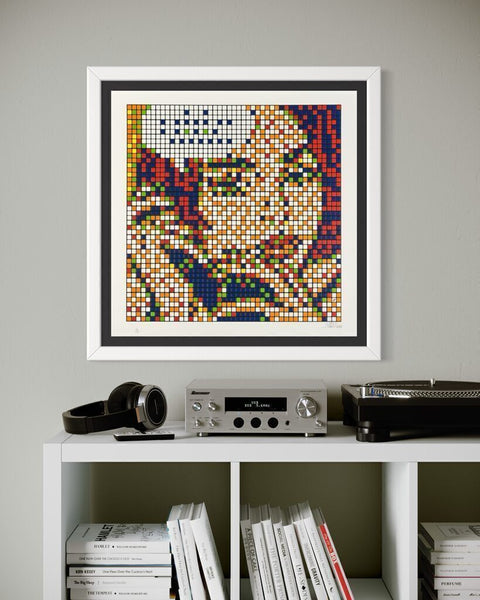
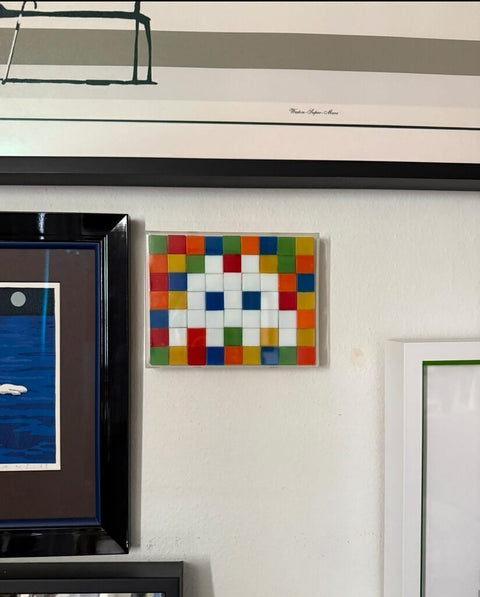
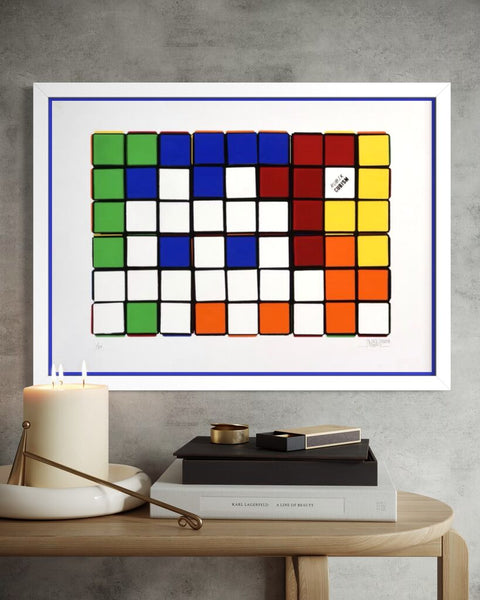
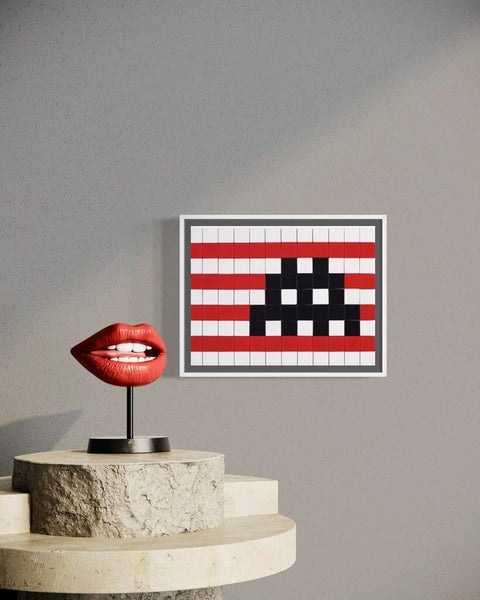
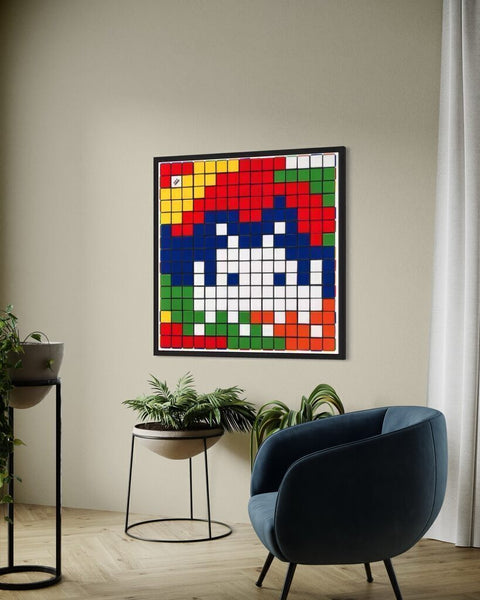
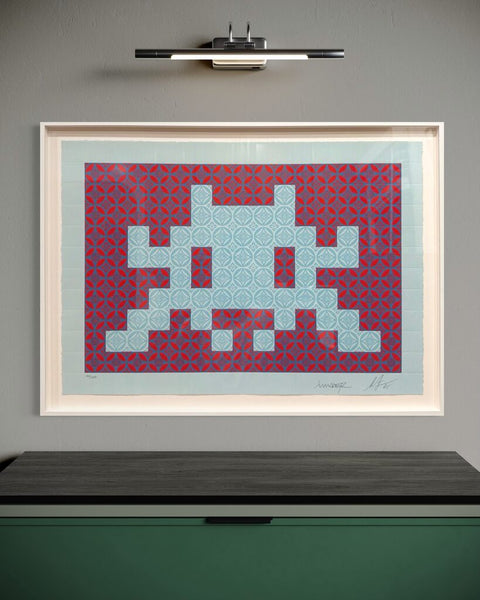
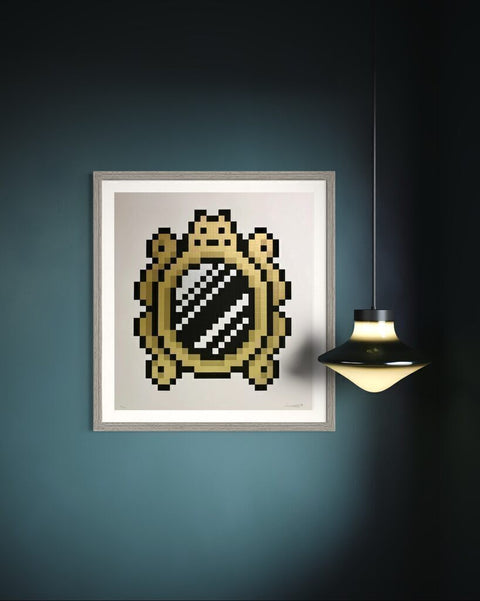
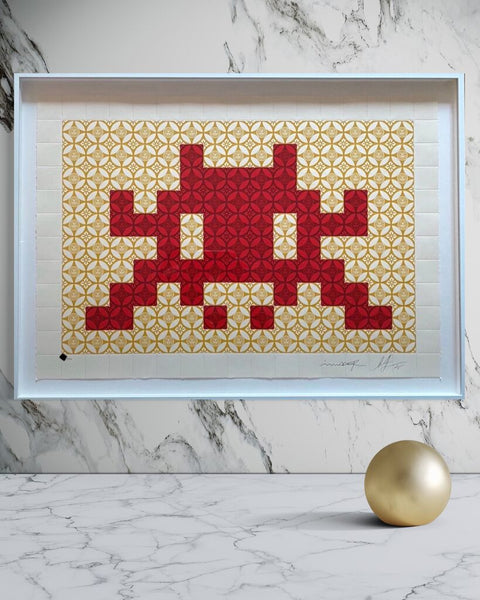
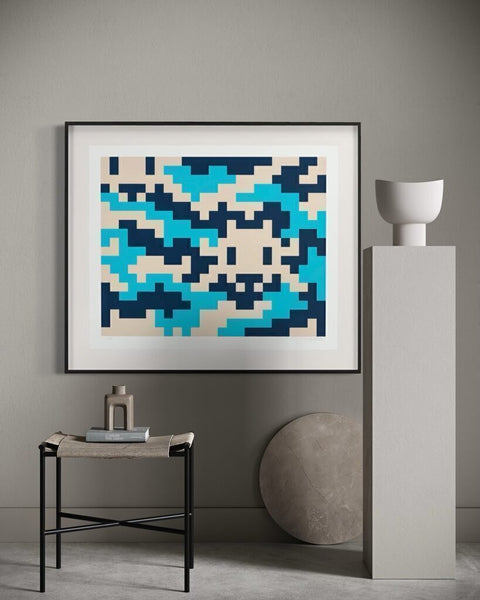
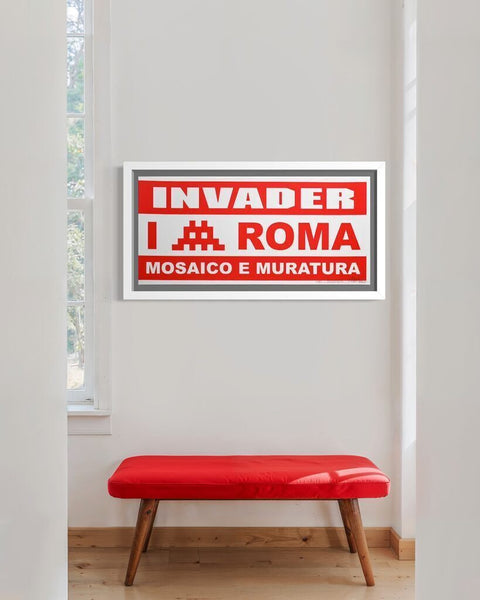
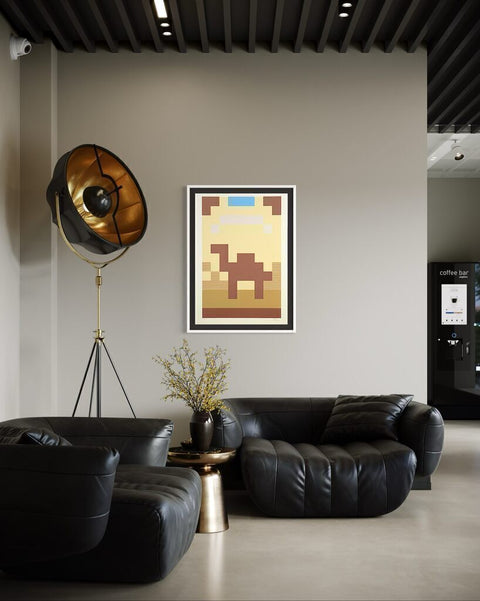
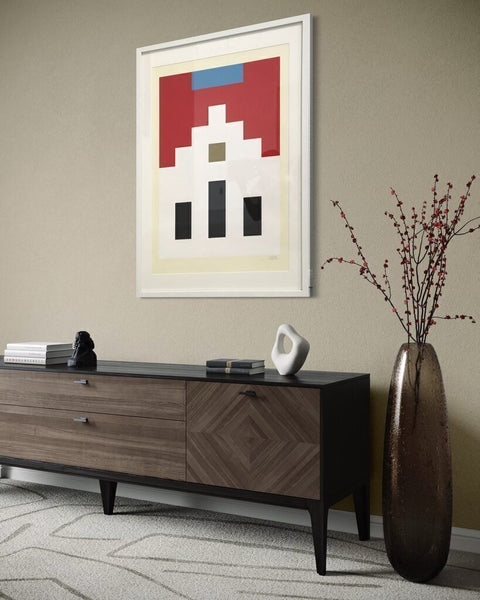
Invader (b. 1969, France) is among the most consequential figures in contemporary urban art. Since 1998 he has installed more than 4,000 ceramic-tile mosaics across 80-plus cities, treating the world as a single, mapped game board. His studio practice extends the pixel logic of those street works into two distinct bodies: Aliases, framed mosaic works derived from the invasion program, and Rubikcubism, large-scale portraits and appropriations built from unaltered Rubik's Cubes. The artist has never revealed his identity, and every studio work is registered and certified through his own authentication process — a discipline that has made his market unusually clean for the street-art sector.
Working across contemporary practice from Paris, France Invader is represented on Rare Form because the works we can offer meet the Rare Form Standard: a reviewed seller, disclosed documentation and condition described as recorded.
Signature pieces by Invader
Invader — market performance
Historical market information is provided for context and does not represent a prediction of future value.
Counted from the Rare Form catalogue. Asking prices are prices offered, not prices realised.
Median realised price, unique Rubik and mosaic works.
Source: Aggregated published auction results · 12 months to June 2026 · Sample: 61 lots
Median of sold lots; bought-in lots excluded. Buyer's premium included.
- Historical high at auction
- $1,720,000Alias HK_58 (2014), Sotheby's Hong KongSource: Sotheby's published results · October 2021 · USD · Buyer's premium includedSingle published hammer price plus buyer's premium, as reported by the house.
- Auction range, Rubik and mosaic works
- $48,000 – $410,000Source: Aggregated published auction results (Sotheby's, Christie's, Phillips, Artcurial) · January 2023 – June 2026 · USD · Sample: 61 lots · Buyer's premium includedInterquartile range of sold lots catalogued as unique Rubik or mosaic works. Bought-in lots excluded.
- Auction frequency
- ≈ 140 lots per yearSource: Aggregated published auction results · Rolling 24 months to June 2026 · Sample: 281 lotsAll catalogued lots offered, including bought-in lots.
- Public availability
- Editions frequent; unique works scarceSource: Rare Form market survey of published catalogues · June 2026 · Sample: 281 lots reviewedShare of offered lots catalogued as unique rather than editioned.
Unique Rubik works trade infrequently and are typically placed privately; published results understate true transaction volume.
Last reviewed 8 August 2026.
21 works

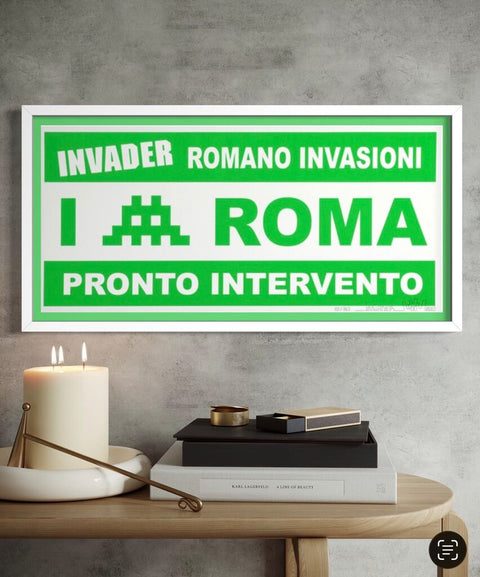
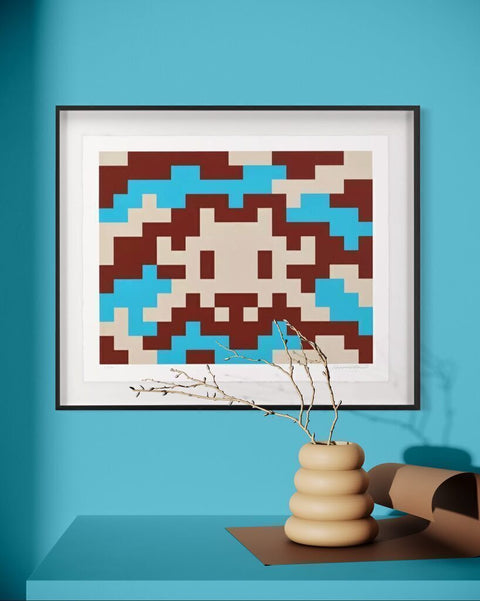
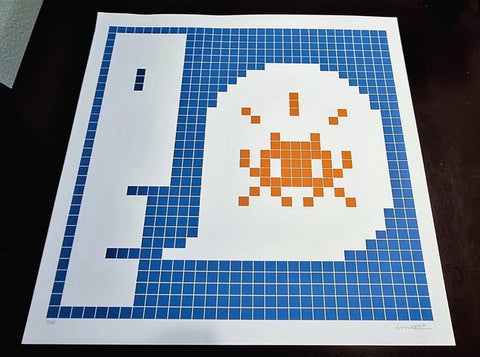
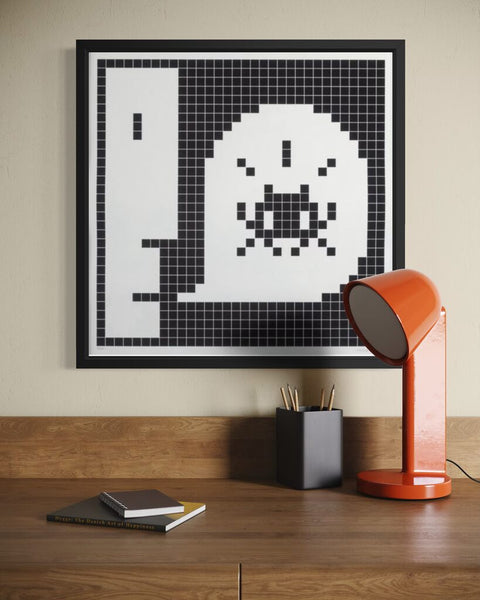


Buying Invader: values, editions and authentication
Invader's market has matured from a street-art curiosity into one of the more consistently traded contemporary names, with clear pricing tiers across prints, Rubik works and alias mosaics. Collectors are usually choosing between an accessible screenprint and a physical mosaic or Rubik piece, and the two behave very differently on resale.
The market
Prints occupy the entry tier and move quickly at auction. Rubikcubist works and alias mosaics sit far above them and are what set the artist's headline results. Demand is notably international, with strong bidding from Asia and continental Europe, and the market rewards recognisable source imagery — pop-culture subjects and the classic Space Invader form above abstract compositions.
Editions and formats
Screenprint editions are typically issued in runs of a few hundred, signed and numbered, often with a small AP run. Alias mosaics are unique or near-unique objects with an alias number, and Rubik works are effectively one-offs. Because the formats are so different, never price a mosaic from print comparables.
Authentication
Invader's studio issues certificates for alias works, and reputable galleries retain purchase records for print editions. For any physical mosaic, insist on the alias reference and the original invoice chain — this is the category where fabricated pieces most often appear.
Condition red flags
- A mosaic offered without an alias reference or studio certificate
- Prints with fading or cockling from humidity, common in tile-and-paper hybrid works
- Loose, replaced or re-glued tiles on a mosaic, which are difficult to restore invisibly
- Provenance that cannot be traced back to an original gallery or studio invoice
Questions collectors ask about Invader
- How much does an Invader print cost?
- Signed and numbered screenprints generally trade from the low thousands into the low tens of thousands depending on the image and edition size. Rubik works and alias mosaics sit well above that, frequently into six figures for major pieces. Format, not just image, drives the price.
- Are Invader works a good long-term hold?
- Invader has one of the steadier price records in street art, supported by genuine international demand and a limited supply of physical works. Prints are the more liquid entry point; mosaics have the higher ceiling but a narrower buyer pool and a longer time to sell.
- How is an Invader mosaic authenticated?
- Through the alias number and studio documentation, supported by an unbroken invoice chain. Street-removed tiles without studio paperwork are effectively unsellable in the legitimate market and should be avoided.
Looking for a specific work by Invader?
Much of what we place is never publicly listed. Share your criteria and an advisor will search privately on your behalf.
Source a work